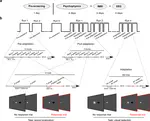
When auditory and visual signals are spatially misaligned, perception adapts to reduce this conflict—a phenomenon known as the ventriloquist aftereffect. However, the neural mechanisms underlying this recalibration are not fully understood. This project aims to uncover how the brain dynamically adjusts spatial representations and decision processes in response to sensory discrepancies, using psychophysics, fMRI, and EEG.